

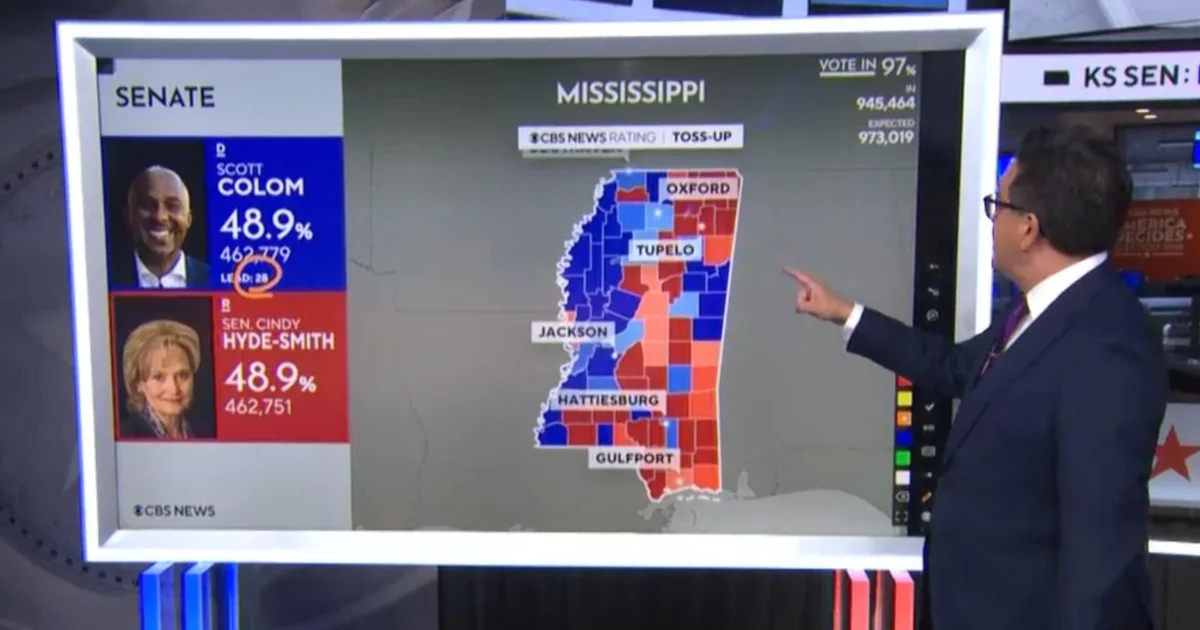
As the nation watches the 2026 midterm results, the Mississippi Senate Race has emerged as a central battleground that could shift the balance of power in Washington. Incumbent Republican Cindy Hyde-Smith is facing a formidable challenge from Democrat Scott Colom in a contest that has defied early polling expectations and remains on a razor's edge. With a majority of votes now tallied, the two candidates are locked in a statistical dead heat, leaving major networks hesitant to project a winner.
Mississippi Senate Race: The Breaking Facts
According to live data from the ground, the competition between Hyde-Smith and Colom has become one of the most expensive and closely watched contests in the state's history. While Cindy Hyde-Smith has historically relied on a solid base of rural support, Scott Colom has made significant inroads in urban and suburban districts. This shift mirrors broader national trends where Democratic candidates are attempting to break through traditional GOP strongholds. Observers are also noting the influence of Ty Pinkins, whose previous statewide runs helped mobilize a new generation of voters in Mississippi, potentially paving the way for the current narrow margins.
Strategic & Long-term Ramifications of the Mississippi Senate Race
The implications of this contest extend far beyond the borders of the Magnolia State. Political analysts are currently cross-referencing the data from this southern battleground with the Ny Election Results to determine if the shifts seen in the New York Election Results—specifically in suburban turnout—are being replicated in the Deep South. If Colom manages to maintain his slim lead, it would signal a historic realignment in the Mississippi Senate, ending decades of Republican dominance.
Currently, officials in several counties are working through a backlog of absentee and provisional ballots. Both campaigns have dispatched legal teams to monitor the counting process, as the final margin is expected to be within a fraction of a percentage point. The outcome will ultimately determine which party controls the upper chamber, making every precinct report critical to the national narrative.