

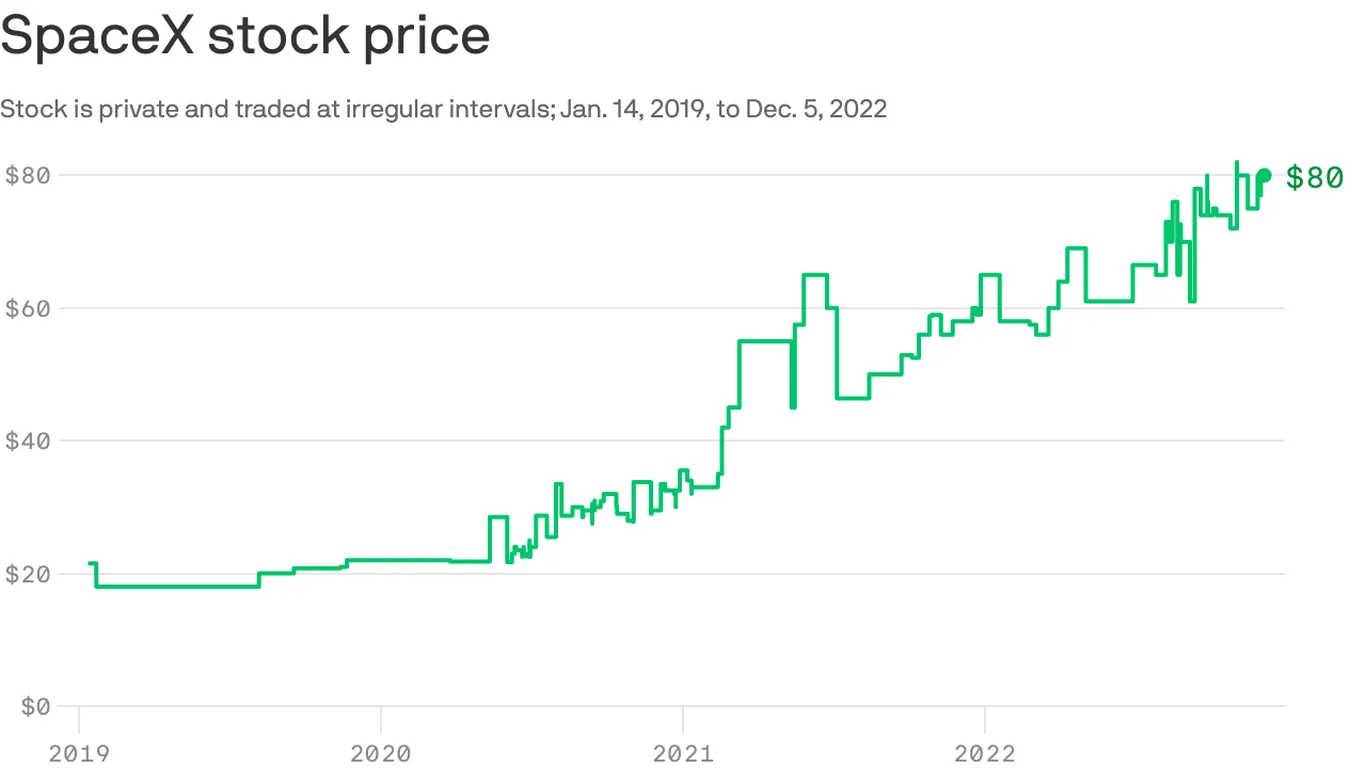
Analyzing Spacex Stock Price Recent Performance reveals a complex narrative of institutional adjustments, macroeconomic pressures, and shifting sector valuations that continue to captivate global financial markets. Trading dynamics have shifted significantly over the past several weeks, drawing sharp focus from equity analysts, institutional stakeholders, and retail investors navigating the aerospace and telecommunications sectors.
Recent sessions have seen heightened volatility surrounding public equities tied to Elon Musk's enterprise ecosystem. Market watchers point to broader technology sector adjustments, lingering artificial intelligence bubble jitters, and political discourse regarding regulatory landscapes as core catalysts influencing short-term market sentiment. Despite these headwinds, fundamental business drivers remain robust, anchored by continuous advancements in satellite deployment, launch cadence economics, and expanding global connectivity initiatives.
Spacex Stock Price Recent Performance: The Breaking Facts
Recent market data places the equity valuation hovering near the $135 threshold, occasionally dipping slightly below its initial public offering price before staging modest technical rebounds. Financial analysts evaluating the equity note that short-term corrections are not uncommon for high-growth aerospace assets following post-IPO highs. Valuation models continue to be heavily influenced by quarterly performance metrics, capital expenditure demands for next-generation rocketry, and ambitious diversification ventures into mobile connectivity markets.
Institutional investors are balancing the high-upside potential of dominant launch infrastructure monopolies against near-term macro liquidity trends. Observers tracking recent portfolio valuations note that capital deployed just months ago has experienced noticeable contraction, prompting a rigorous reassessment of risk-reward parameters across space-tech portfolios.
Background & Timeline of Spacex Stock Price Recent Performance
The trajectory of the equity has undergone distinct phases since its initial public debut. Early euphoric buying pushed valuations significantly higher, establishing a post-IPO peak that many retail investors anticipated would hold steady. However, subsequent macroeconomic tightening, sector-wide valuation compression, and broader market skepticism regarding high-multiple tech assets triggered a downward correction of nearly 30% from those peak levels.
Throughout this timeline, various external developments—ranging from legislative shifts under current political administrations to strategic maneuvers involving potential telecom acquisitions like Boost Mobile—have intermittently altered market momentum. High-profile endorsements from figures such as Binance founder Changpeng Zhao (CZ) have also injected bouts of speculative optimism into the trading pattern.
Contextual Analysis & Associated Developments
Direct institutional and sector developments continue to dictate the broader trading channel. Market participants are increasingly focusing on the interplay between government policy, regulatory approvals, and corporate expansion strategies. For instance, discussions regarding whether political dynamics under democratic leadership could impact federal contracts or regulatory frameworks have added a layer of policy risk to valuation models.
Concurrently, strategic expansions into terrestrial wireless markets via potential acquisitions signal a concerted effort by leadership to diversify revenue streams beyond pure launch services. These moves are designed to capture recurring subscription revenues, creating a hybrid aerospace-telecom business model that financial analysts are still learning to price effectively.
Official Statements & Key Reactions
Market strategists and financial institutions have maintained a cautious yet engaged stance regarding the asset. While some sell-side analysts emphasize valuation discipline and warn of broader tech-sector contagion, bullish voices argue that the temporary market discount offers an attractive entry point for long-term capital.
Corporate insiders have largely remained focused on operational execution rather than short-term ticker fluctuations, highlighting successful orbital missions and scaling subscriber counts for Starlink as the true metrics of enterprise value. Meanwhile, retail forums and financial wire reports continue to debate the psychological implications of trading below the pivotal IPO benchmark.
Strategic & Long-term Ramifications
The broader implications of these valuation shifts extend far beyond immediate portfolio balances. As commercial space exploration transitions into a mature, capital-intensive asset class, public market pricing mechanisms will increasingly enforce traditional financial disciplines on once-private innovators.
If management successfully executes its dual strategy of interplanetary transport dominance and global broadband-to-mobile integration, current valuation dips may be viewed retrospectively as minor consolidation phases. Conversely, failure to meet aggressive deployment schedules or manage capital expenditure could prolong recovery timelines.
What Observers Are Watching Next
Market participants are now closely monitoring upcoming quarterly earnings reports, regulatory decisions concerning spectrum allocations, and macro interest rate trajectories. The upcoming fiscal periods will test management's ability to maintain margin expansion while absorbing the heavy capital costs associated with next-generation infrastructure development.
As trading desks digest incoming macroeconomic data, the equity remains a bellwether for investor appetite toward high-risk, high-reward technological frontiers.